


What: Spyker C8 Preliator XXV Coupé
Manufacturer: Spyker Cars
Production: 25 planned
Debut: August 14, 2026 – The Quail, A Motorsports Gathering, Carmel, CA, USA
Configuration: Mid-engine, rear-wheel drive
Chassis: Aluminum spaceframe
Body: Hand-formed aluminum
Engine: Audi-sourced 4.0-liter twin-turbo V8 (EA825 believed, not confirmed)
Displacement: 3,996 cc (if EA825 specification is confirmed)
Power: 800 hp
Torque: 1,000 Nm (738 lb-ft)
Transmission: 6-speed manual
Top Speed: More than 217 mph
Production Location: Hand-built in England
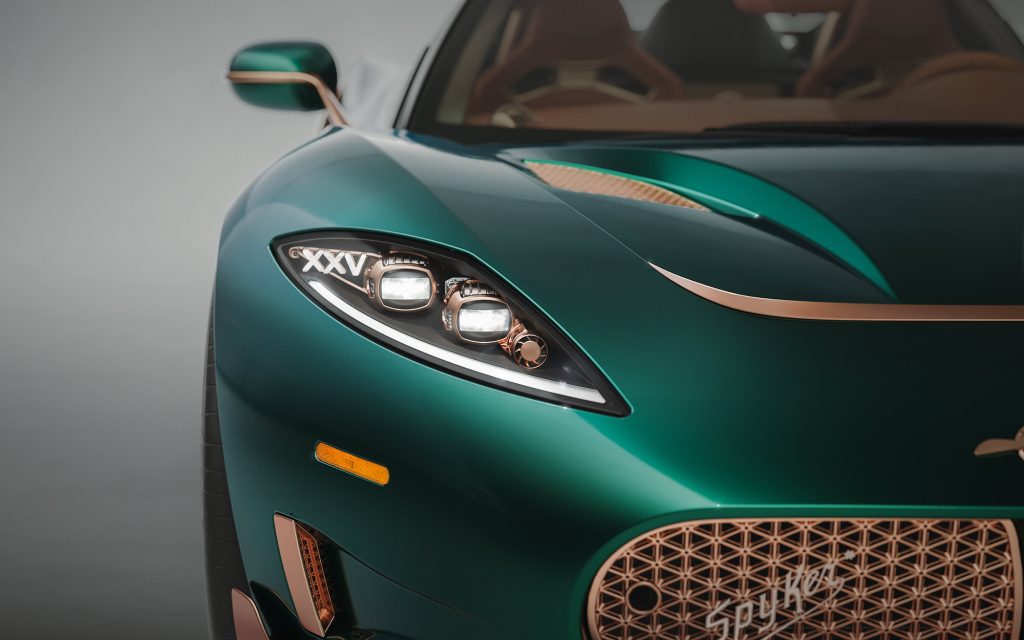
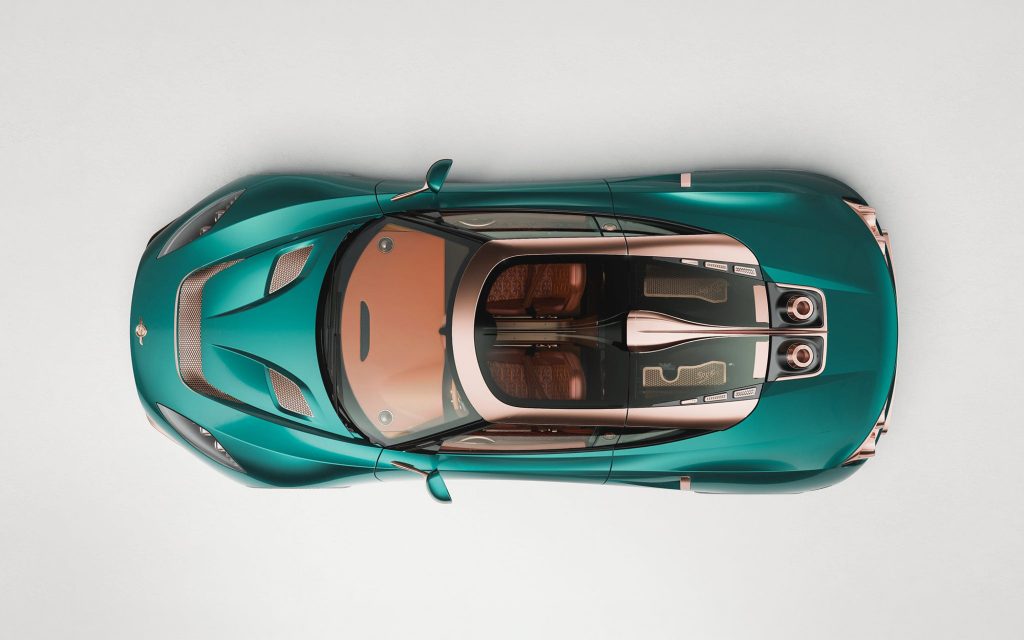
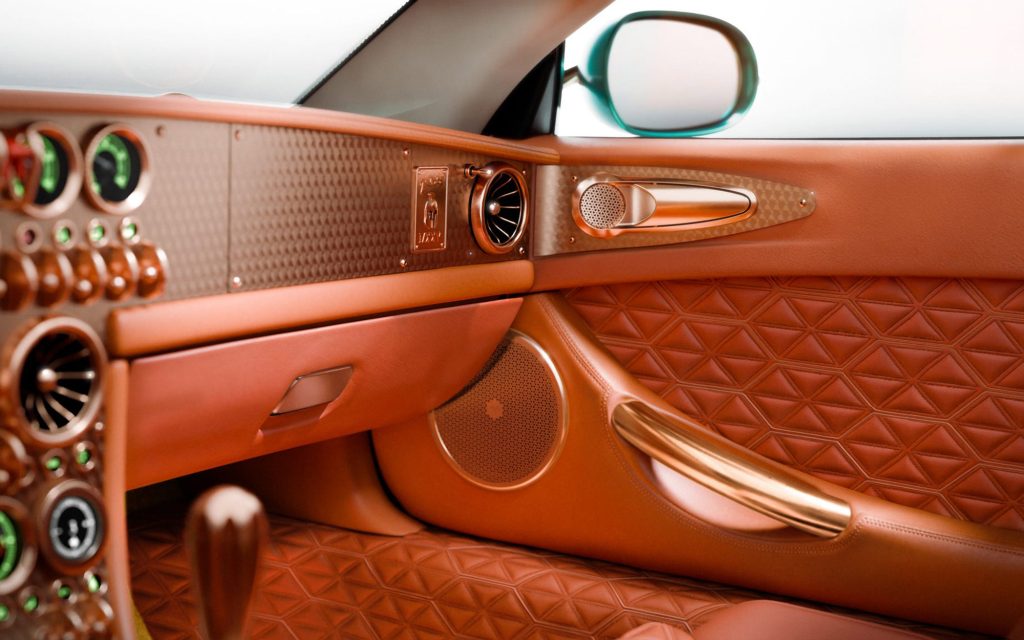
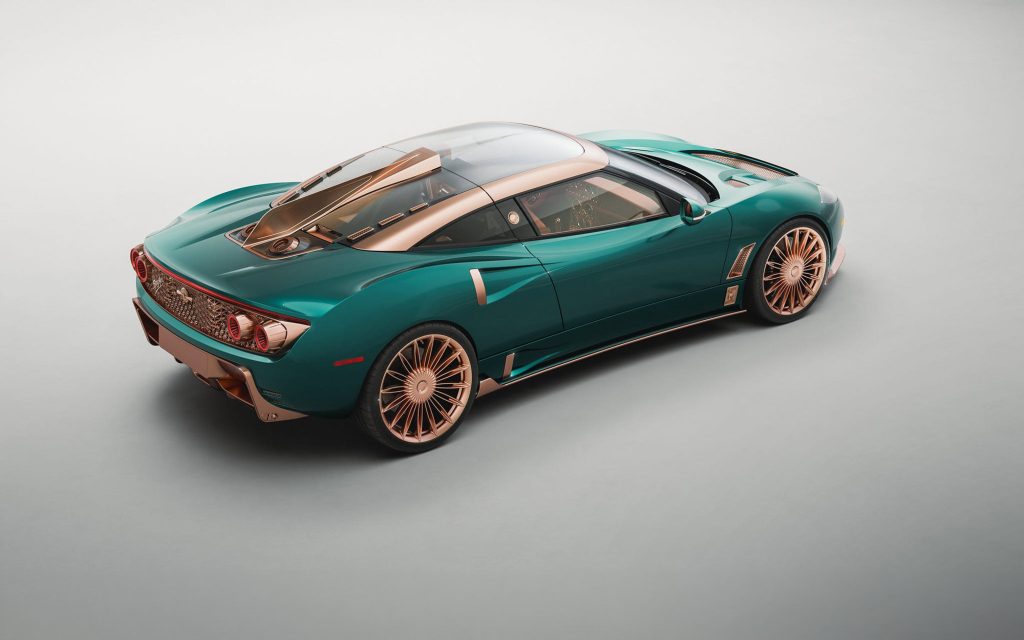
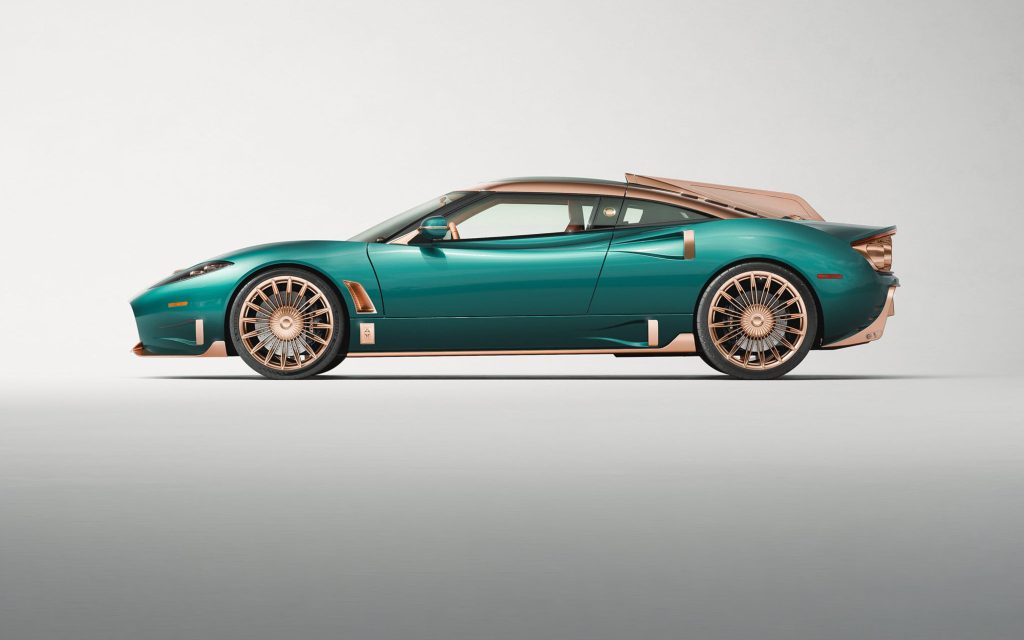
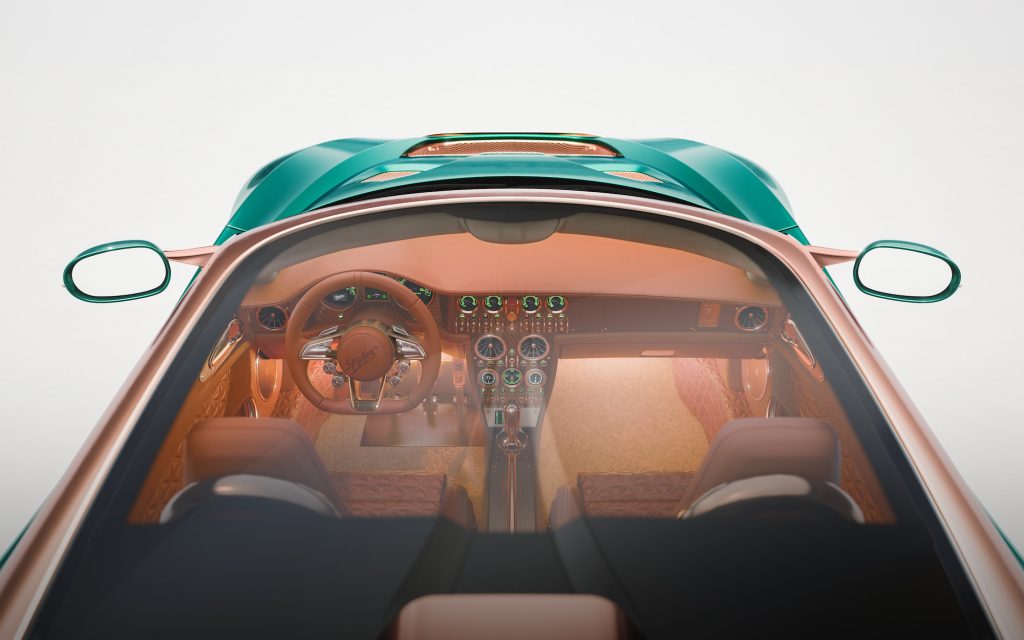
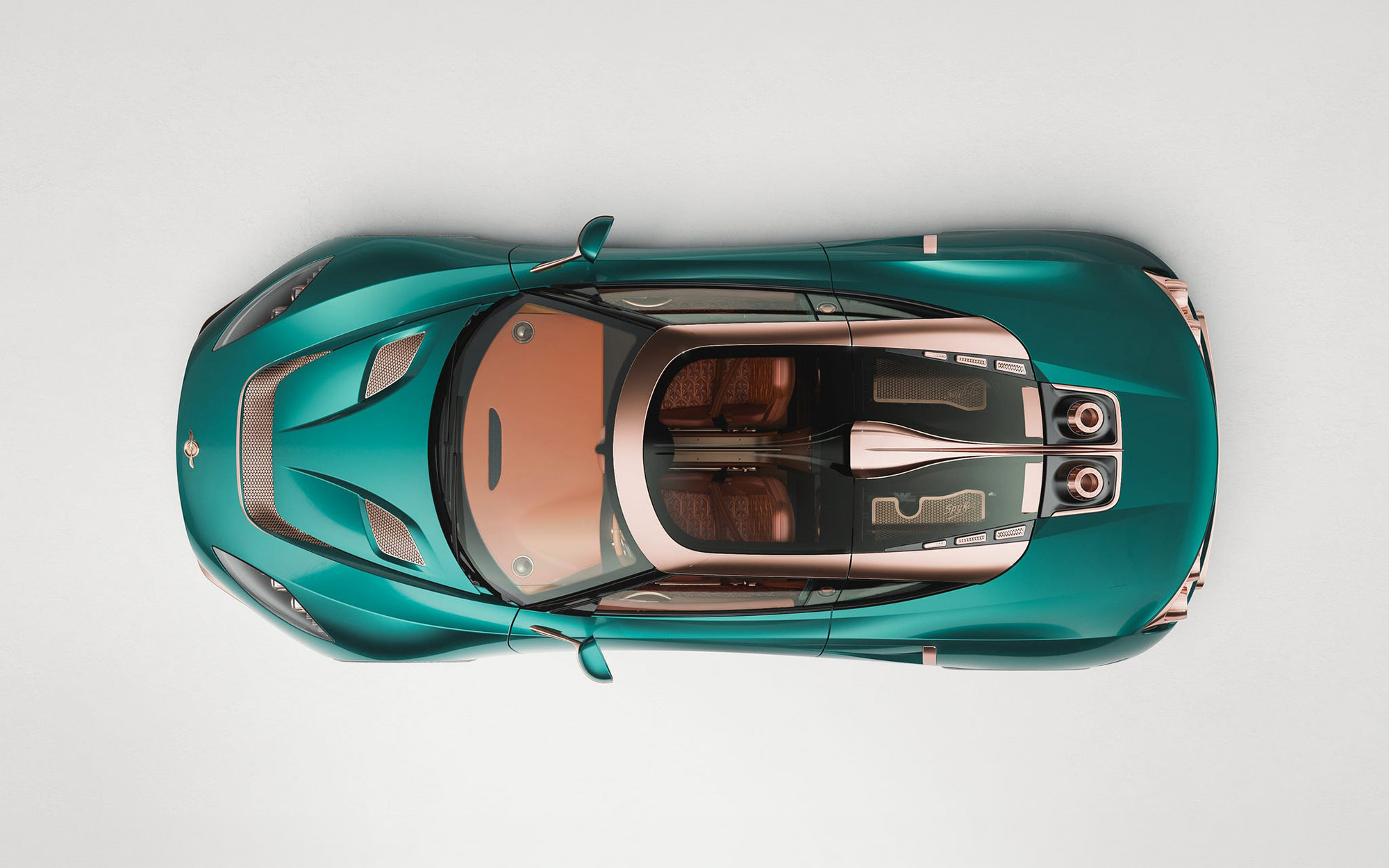
Debut Car: Chassis No. 270, Quail Green with rose-gold detailing and Tuscan Saddle leather
Production Status: 25 individually commissioned cars planned
AUDI CONNECTION
The C8 Preliator XXV marks a return to Audi power for Spyker, renewing a relationship that dates to the beginning of the Dutch marque’s modern era.
When Spyker returned to automobile production in 2000, its C8 sports cars were built around Audi’s naturally aspirated 4.2-liter V8. The engine powered several generations and derivatives of the C8, including the Spyder, Laviolette and Aileron, giving the tiny Dutch manufacturer access to a sophisticated production powertrain while it concentrated on its distinctive chassis, aluminum coachwork and aviation-inspired design.
The new Preliator XXV uses a 4.0-liter twin-turbo V8 producing 800 hp and 1,000 Nm. Spyker’s official launch material does not identify the engine supplier, though independent reporting from the car’s Monterey debut identifies it as Audi-sourced.
Spyker has also not confirmed an engine code. Its displacement and configuration point toward Volkswagen Group’s EA825 4.0 TFSI architecture, familiar from contemporary Audi models including the RS 6, RS 7, S8 and RS Q8. Until further technical information is released, the EA825 identification should be considered probable rather than confirmed.
OVERVIEW
The Spyker C8 Preliator XXV Coupé debuted August 14, 2026 at The Quail, A Motorsports Gathering during Monterey Car Week, marking the return of Spyker to limited-series automobile production after roughly a decade.
Despite continuing the Preliator name, Spyker describes the XXV as an entirely new automobile conceived from a clean sheet. Its aluminum spaceframe was redesigned in-house, while every exterior panel was newly formed by Coventry Prototype Panels in England.
Production is planned at just 25 examples, each individually commissioned. Spyker estimates approximately 2,100 hours are required to construct each car.
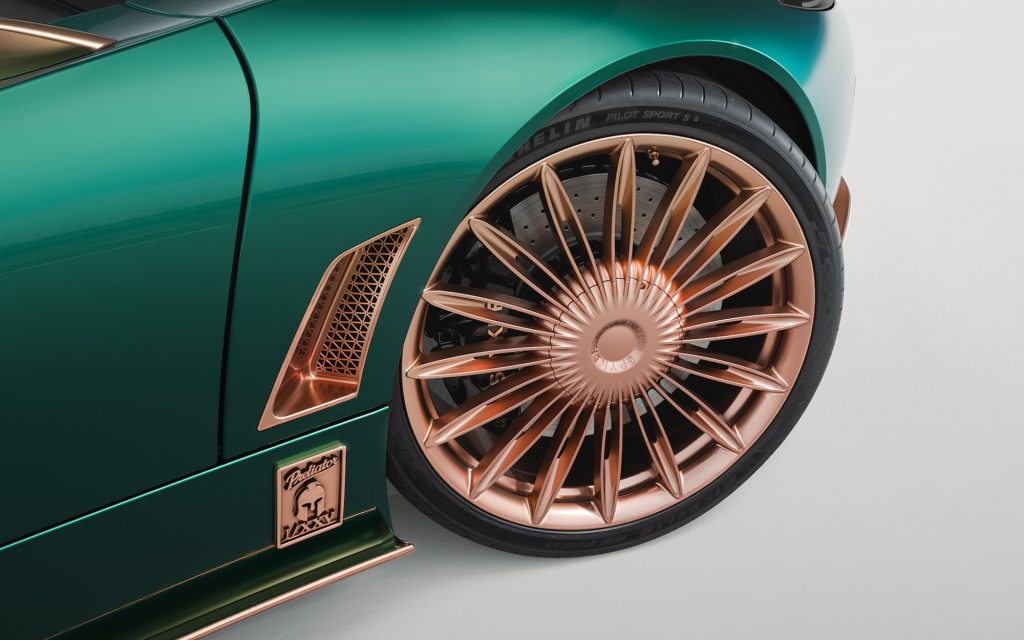
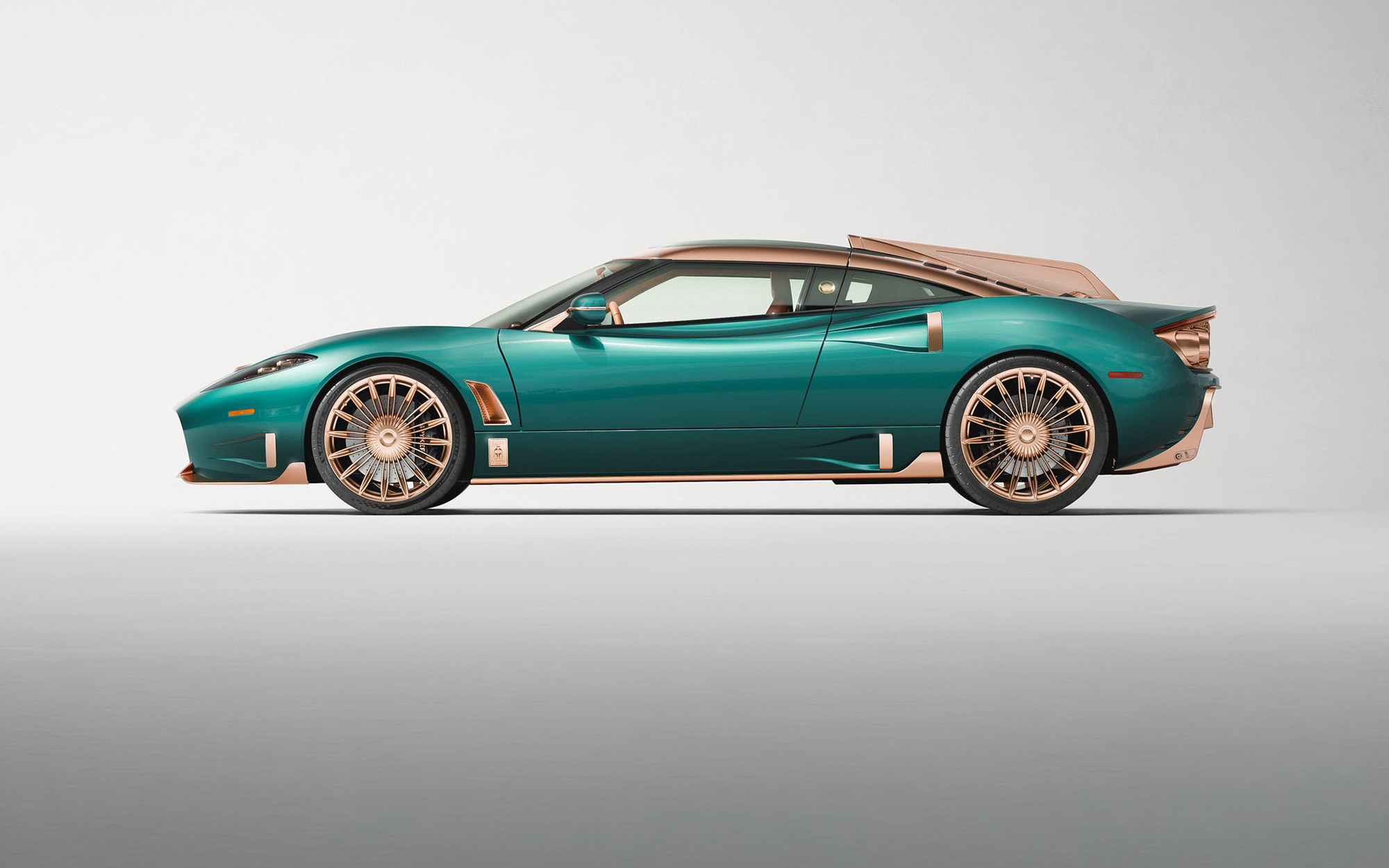
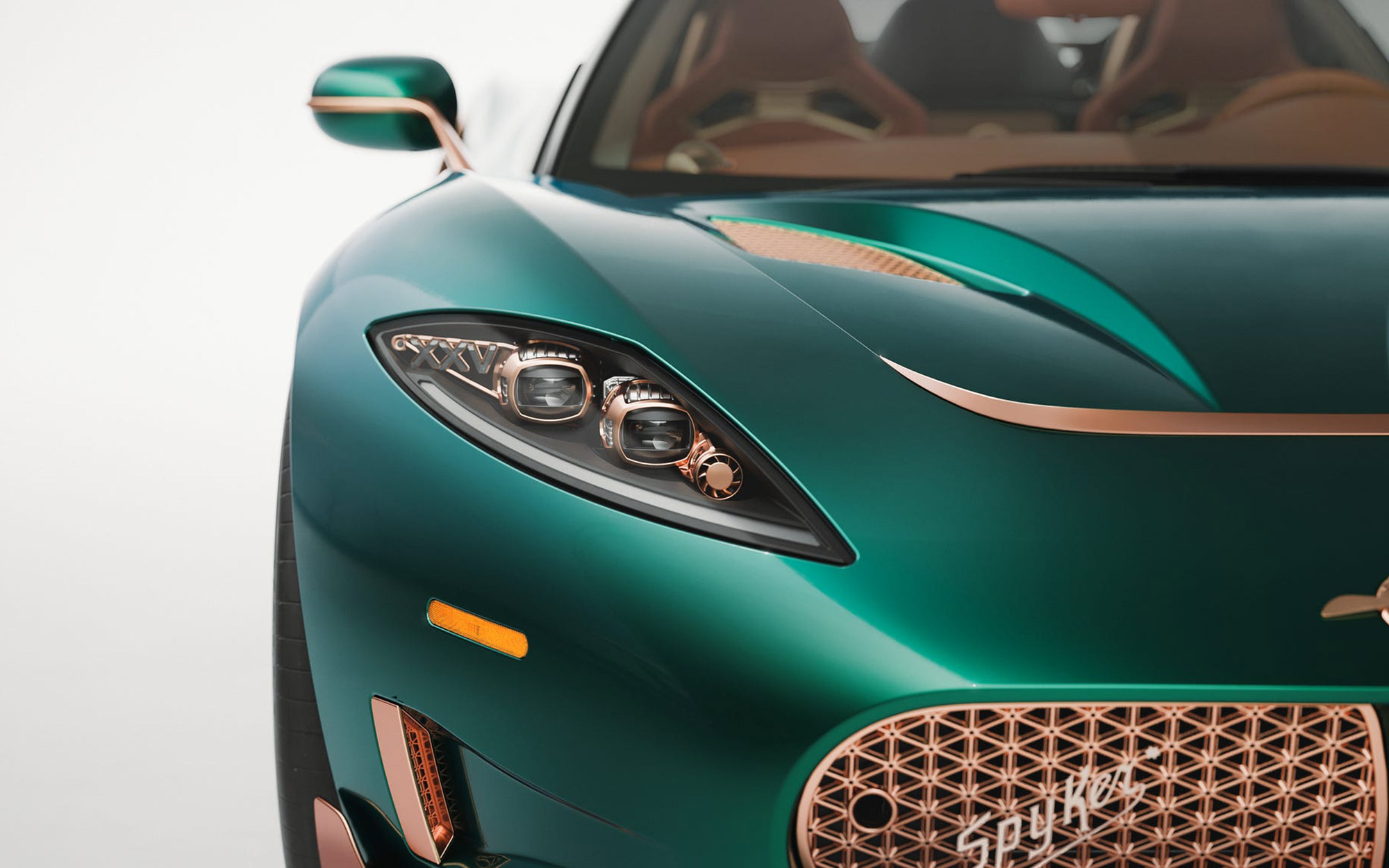
The debut example is chassis No. 270, finished in Quail Green metallic with subtle rose-gold flakes, rose-gold brightwork and Tuscan Saddle leather. Spyker identifies it as the last of 255 cars built by the revived company since 2000.
DESIGN & ENGINEERING
Aviation-inspired design remains central to the Preliator XXV, continuing a theme established by the modern C8 Spyder and Laviolette.
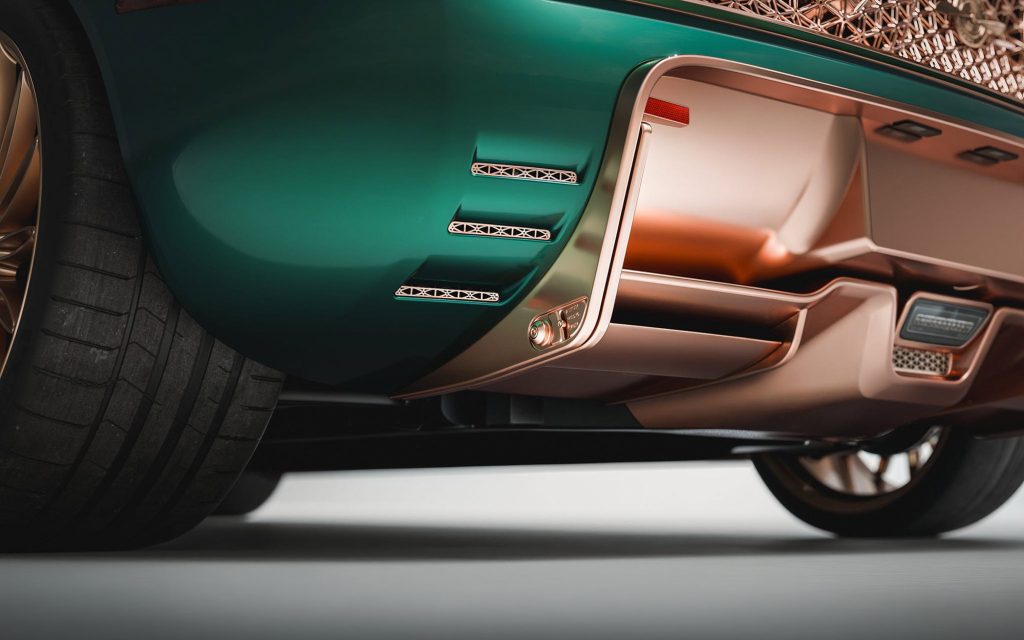
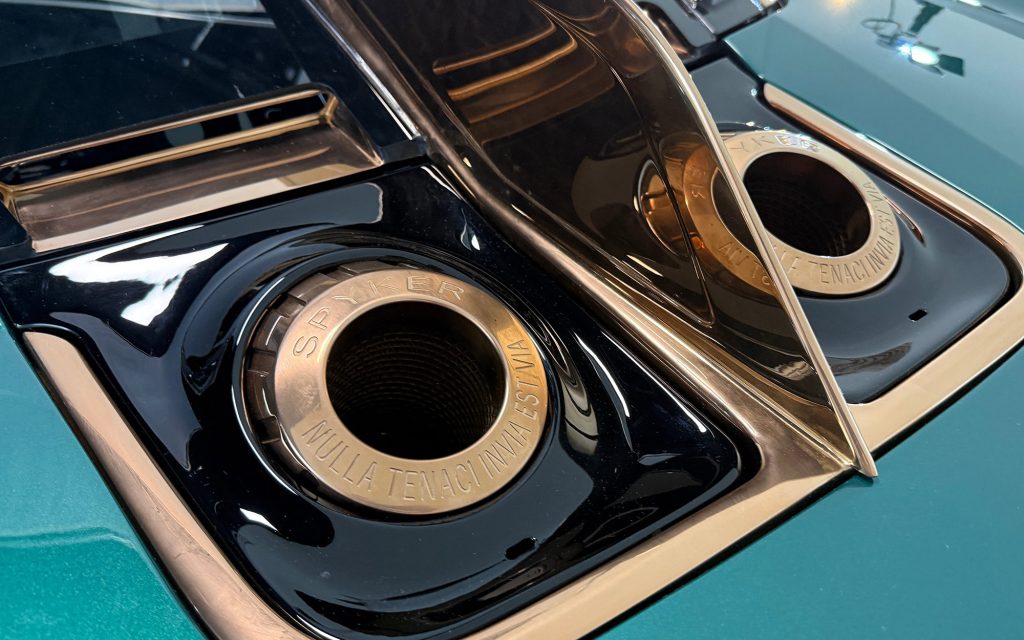
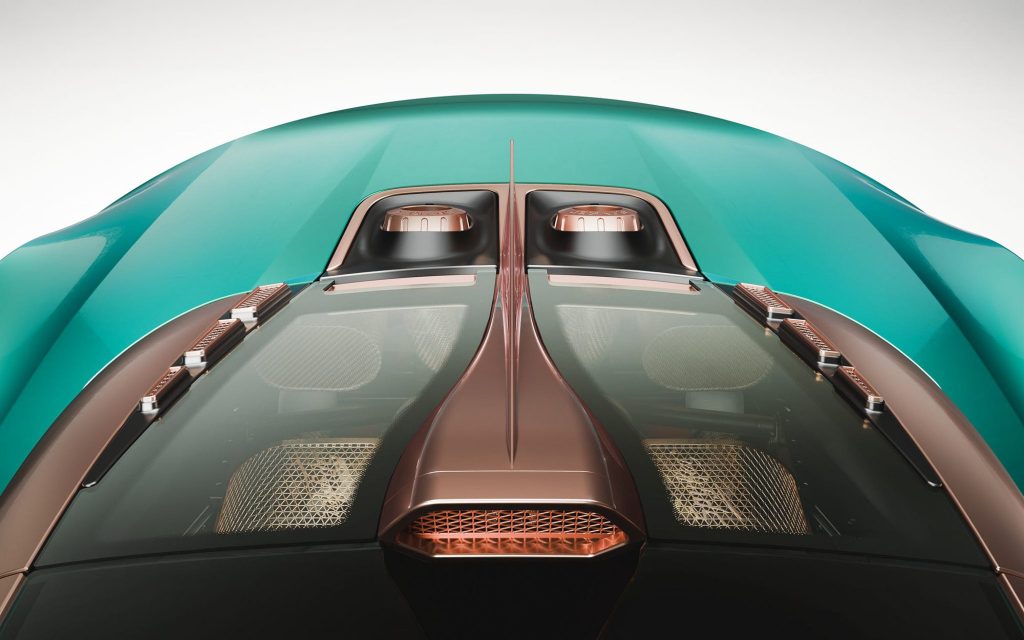
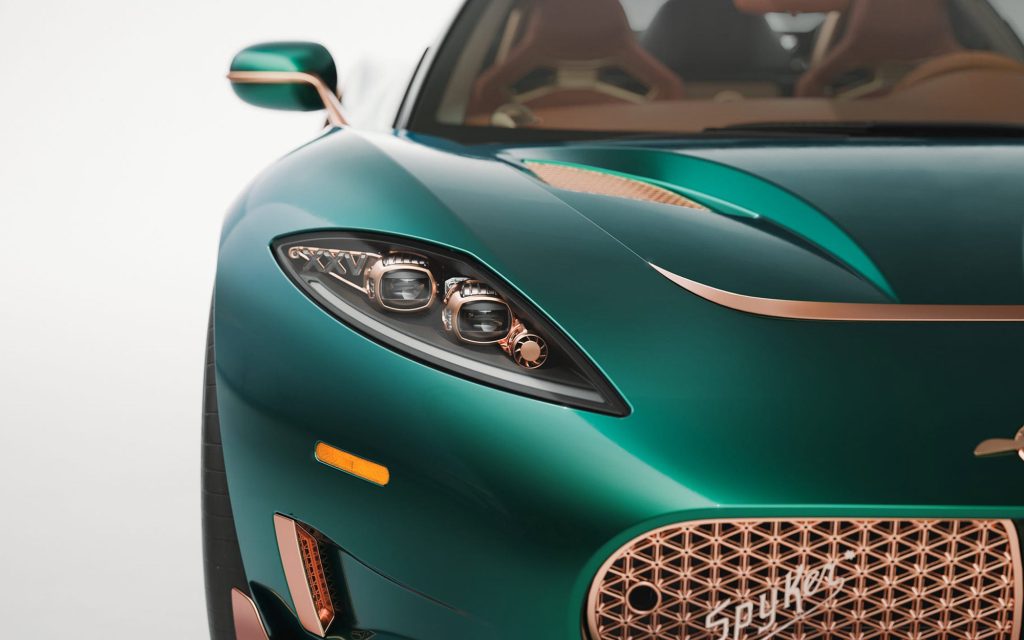
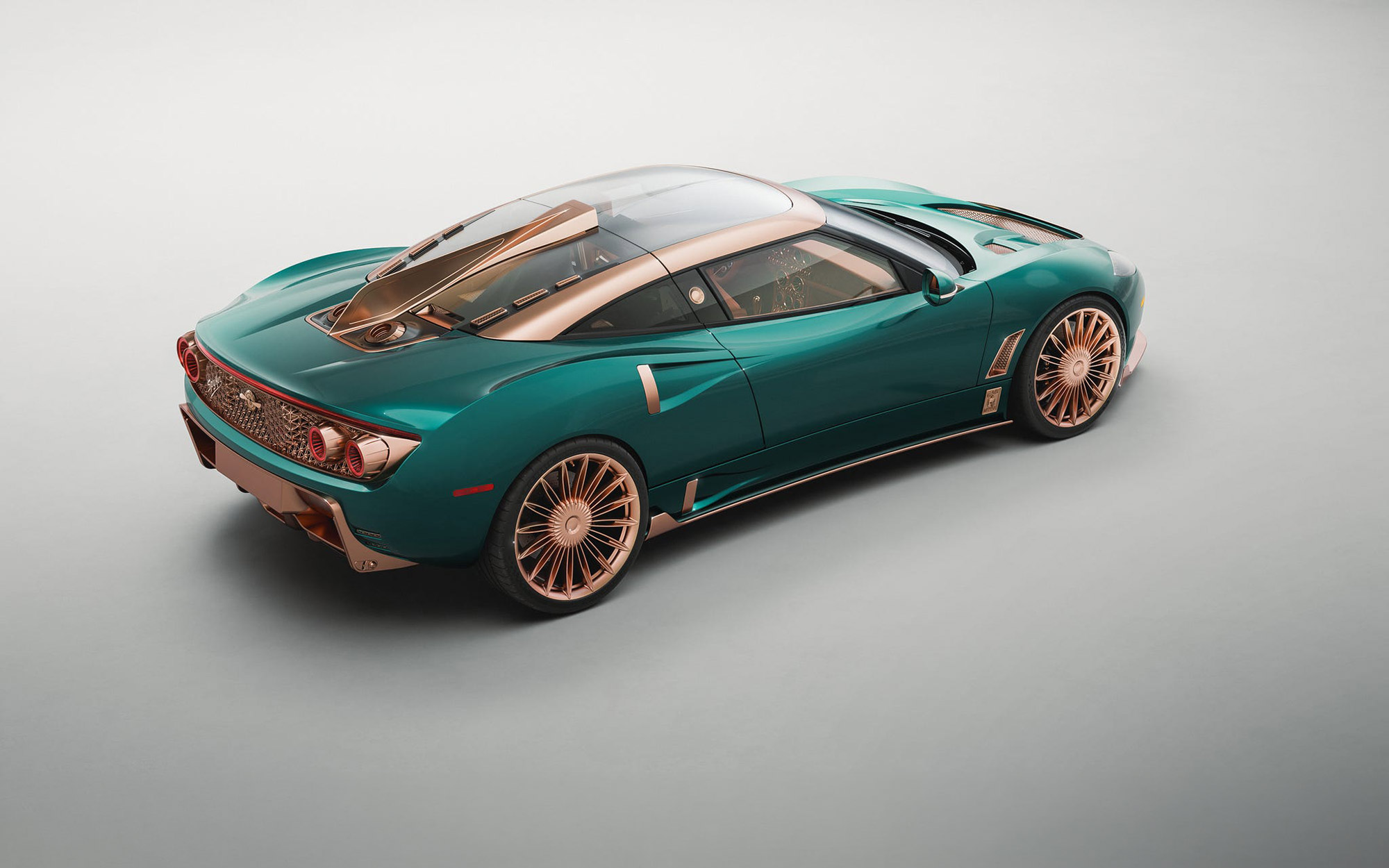
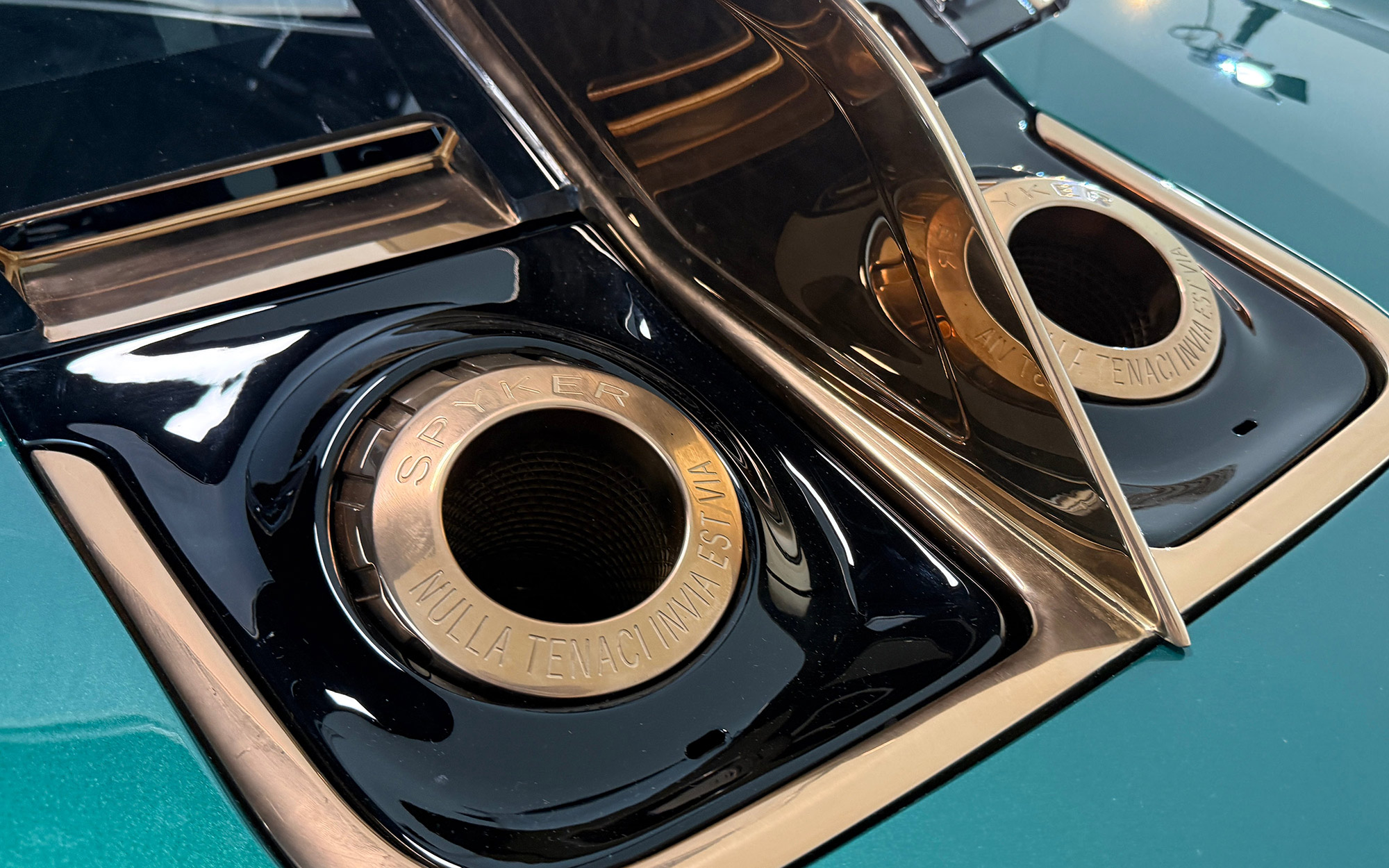
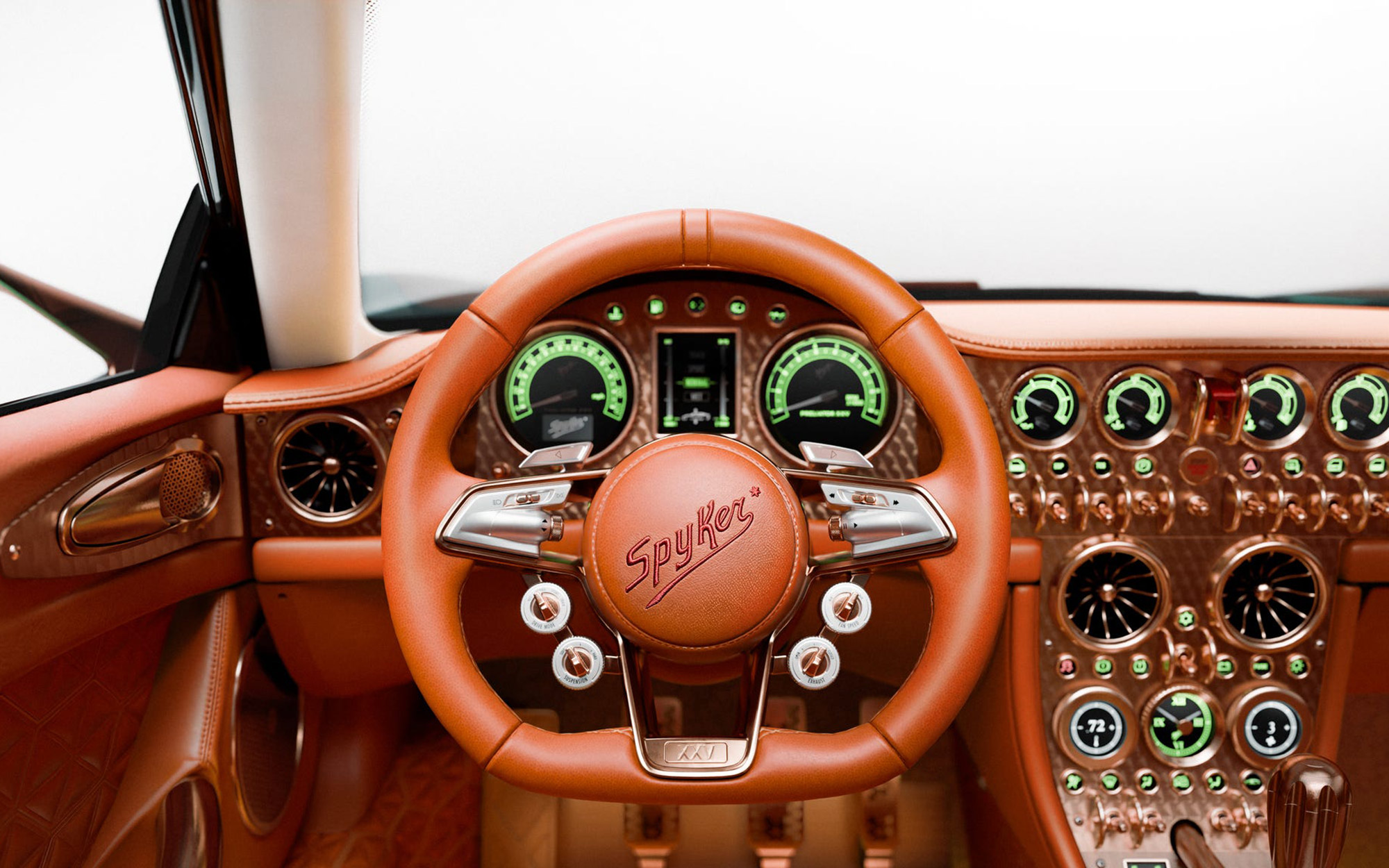
NACA ducts form the air intakes, while the headlights incorporate the XXV name and the rear lights are shaped to resemble fighter-jet afterburners. A prominent rear fin references the 1919 Spyker C1 Aerocoque. Aerospace-style isogrid structures appear throughout the grilles, vents, pedals, exhaust mesh and seat upholstery.
The body remains hand-formed aluminum rather than carbon fiber. Spyker considers the material fundamental to its coachbuilding philosophy because it can be shaped, worked and polished by individual craftsmen.
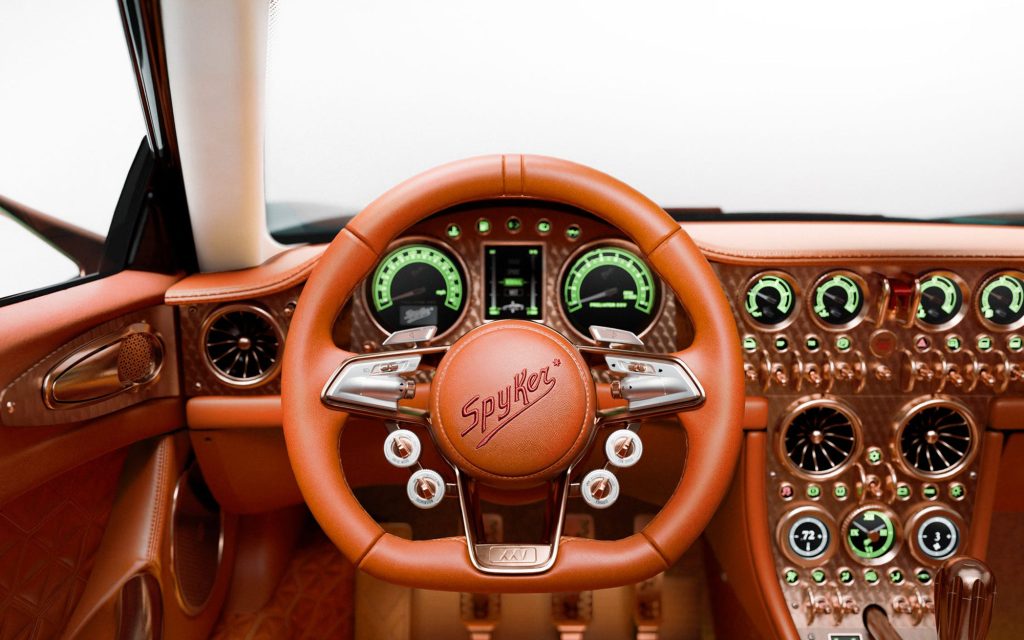
The interior is similarly traditional. A head-up display is the car’s only screen, while physical controls and Spyker’s signature exposed gear linkage dominate the cockpit. The 800-hp V8 is paired exclusively with a true six-speed manual transmission.
SHARED DNA
Spyker represents one of the most significant examples of a boutique manufacturer building its identity around Audi production engines.
Beginning with the C8 at the turn of the century, Audi’s 4.2-liter V8 provided the foundation for a series of low-volume Dutch sports cars whose character was otherwise almost entirely removed from contemporary Audi production models.
That relationship placed Spyker alongside manufacturers including Koenigsegg, Gumpert, Donkervoort, YES! and KTM that utilized Audi or Volkswagen Group powertrains during the late 1990s and 2000s.
The C8 Preliator XXV potentially extends that shared engineering history into another generation. Rather than the naturally aspirated 4.2-liter V8 associated with earlier Spykers, the new car appears to adopt Audi’s modern 4.0-liter twin-turbo V8 architecture while retaining the rear-wheel-drive, manual-transmission configuration that makes the application distinctly Spyker.
KNOWN HISTORY
2000 – Modern Spyker automobile production begins with the C8 Spyder, powered by an Audi 4.2-liter V8.
2000s – Audi V8 power is used across multiple Spyker C8 derivatives including the Spyder, Laviolette and Aileron.
2016 – Spyker unveils the C8 Preliator at the Geneva Motor Show with a supercharged Audi 4.2-liter V8 producing 525 hp. At the time, the company says the final five C8 Ailerons are being completed.
2017 – Spyker announces plans to replace the Preliator’s Audi engine with a naturally aspirated 5.0-liter Koenigsegg V8. The Preliator subsequently fails to enter series production.
August 14, 2026 – Spyker unveils the C8 Preliator XXV Coupé at The Quail during Monterey Car Week. The new car uses a 4.0-liter twin-turbo V8 producing 800 hp and 1,000 Nm, reported independently as Audi-sourced.
August 16, 2026 – C8 Preliator XXV scheduled to appear on the Concept Car Lawn at the Pebble Beach Concours d’Elegance.
SIGNIFICANCE
The C8 Preliator XXV reconnects one of the most unusual relationships in modern Audi engine history.
During Spyker’s first modern production era, Audi’s naturally aspirated V8 provided the mechanical foundation for some of the world’s most distinctive low-volume sports cars. Roughly a decade after Spyker last assembled production cars, its latest revival appears to return to the same formula.
If the engine is confirmed as an EA825, the Preliator XXV will also represent a particularly unusual application of Audi’s current 4.0 TFSI architecture: mid-mounted, driving only the rear wheels and connected to a six-speed manual transmission.
For Audi enthusiasts, the C8 Preliator XXV therefore represents both a continuation of Spyker’s own history and another obscure chapter in the much broader story of Audi engines finding their way into some of the world’s smallest and most unconventional sports car manufacturers.
PHOTO GALLERY